Open core software for innovation in agriculture

Open Research Base (ORB) gGmbH is a non-profit organization that breaks down traditional, isolated approaches to innovation and focuses on open innovation. The underlying rationale is that companies—especially start-ups and SMEs—are often no longer able to cover the necessary resources and competencies for complex developments on their own.

To this end, ORB is establishing a network of companies, universities, research institutions, and agricultural businesses and promoting strategic partnerships in the form of cross-company collaborations. Open exchange and close cooperation are giving rise to sustainable open-core technologies, which ORB is developing for practical and commercial application. To this end, it brings together the relevant players, supports knowledge transfer through workshops and training courses, and promotes collaborative, non-profit research and development.

The aim is to promote the digitization and automation of agriculture in a practical manner, make farms resilient and future-proof, and create solutions that address ecological and economic challenges. In doing so, ORB is guided by the United Nations Sustainable Development Goals (SDGs) and pursues the long-term goal of establishing cycle-oriented, regionally anchored value creation.

Start now

Our network

Since August 15, 2025, we have been responsible for managing the DeepFarmBots network and look forward to close and future-oriented collaboration.

Together with partner companies and agricultural practices in North Rhine-Westphalia, we are also implementing the EIP-Agri innovation project "Non-profit farm management system for the digitization of agriculture."

At the core of the initiative is the development of a non-profit, open farm management system (ORB-FMS) for the holistic digitalization of agricultural enterprises. The project combines ERP technology, AI, automation, and direct marketing in close collaboration with agricultural practice to sustainably strengthen efficiency, sustainability, and regional value creation. ORB FMS is open-source oriented and consistently practice-driven. 

Our goals

Cooperation & Network

The ORB promotes a transparent and collaborative development culture by initiating strategic partnerships such as cross-company collaborations (CCCs) and public-private partnerships (PPPs), as well as encouraging joint development projects and open dialogue. 

Open platform & knowledge transfer

The ORB ensures that technological advances are accessible and usable by all in order to achieve long-term environmental and social benefits. It democratizes innovation by making technologies and research results available as open-core solutions. 

Collective Innovation 

The ORB supports sustainable innovations in agriculture by promoting knowledge exchange and resource utilization among various stakeholders. Open development processes help accelerate the transition from idea to market launch.


Our guiding principles

TGAL

Think global. Act local.

SDG's

Sustainable development goals


PPP

Public-Private-Partnership

CCC

Cross-Company-Collaboration

The Open Research Base (ORB) follows clearly defined guiding principles in order to develop sustainable and practice-orientated technologies for agriculture. At the centre are the principles "Think Global. Act Local." (TGAL), sustainable development goals (SDGs), public-private partnerships (PPP) and cross-company collaboration (CCC). These guiding principles reflect the ambition to tackle global challenges through local solutions and to promote innovative technologies that directly benefit farmers through open collaboration.

TGAL

Think Global. Act Local

We connect farms and businesses to develop and implement open basic technologies for sustainable agriculture. Global challenges such as climate change and resource scarcity are addressed through regional, tailor-made solutions. This creates local infrastructures that make innovations permanently and scalably available, ensure maintenance and further development, and strengthen regional value creation and communities.

SDG's

Sustainable Development Goals 

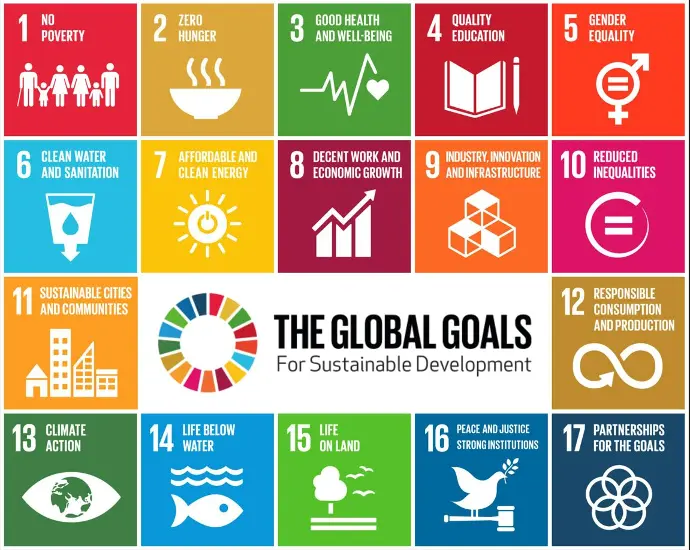
ORB is guided by the UN Sustainable Development Goals and develops technologies that strengthen agriculture ecologically, socially, and economically:

SDG 2 – Zero Hunger: Automation & scaling support food securit​y.

SDG 3 – Health & Well-being: Promoting sustainable farming practices for healthy vegetables.

SDG 6 – Clean water: Precision irrigation saves up to 75% of fres​h water.

SDG 8 – Decent work: Robotics reduces physical strain and creates opportunities for further training in future technologies.

SDG 9 – Innovation & Infrastructure: Open, scalable technologies and digitalization for a future-proof industry.

SDG 11 – Sustainable communities: Field-to-fork direct marketing for shorter distances and a smaller ecological footprint.

SDG 12 – Sustainable consumption/production: Circular systems (e.g. reusable vegetable crates) prevent waste.

SDG 15 – Life on land: Biodiversity through targeted, environmentally friendly farming methods and technologies.

PPPs

Public-Private-Partnerships

We support cooperation between the public sector and businesses in order to implement projects more efficiently and effectively. This ensures that public funding is used to achieve goals that serve the common good (e.g. organic farming, regional supply), while at the same time incorporating expertise, innovative strength, and capital from the business sector. 

These partnerships enable large projects to be implemented more quickly and cost-effectively by sharing risks and returns. ORB supports its members in realizing technological potential from research to market launch, even if economic expectations lag behind ecological and social goals in the early stages.

Example: When switching to organic farming, PPP-financed ORB solutions (digitalization/automation) compensate for initial yield losses and enable long-term ecological and economic success.

CCCs

Cross-Company-Collaborations

We leverage collaborations between independent companies that pool resources, expertise, and technologies to develop and market innovations more quickly and efficiently (e.g. through joint R&D projects, alliances, or co-marketing). This allows risks to be shared, competitive advantages to be built, and new markets to be opened up. It also avoids duplication of development efforts and brings together SMEs and start-ups in particular for collaborative innovation.  

Our development frameworks

The aim of ORB is to bundle future technologies in the fields of robotics and AI in order to enable the comprehensive digitalisation and automation of agriculture. The ORB relies on the two development frameworks ODOO and ROS, which offer members an open technology basis (open core) to further develop these jointly and for the common good.

ODOO is a flexible open source ERP framework that brings together core business processes (e.g. sales, human resources, inventory) in a common database. With over 16,000 extension modules, it is modular and customizable and can be expanded in a targeted manner by ORB members, which is a decisive advantage over traditional ERP systems. ODOO is used by more than 12 million users worldwide. 

more details

ROS (Robot Operating System) is a widely used open source platform in the field of robotics, which includes standardized modules for sensor processing and the control of actuators and robotic systems. Thanks to its open and extensible architecture, ROS integrates very well into agricultural applications and accelerates the implementation of innovations in practice. ROS is now an established standard in industrial, automotive, and agricultural robotics and is supported by a large community.

more details