ORB-FMS
Holistic farm management system for agriculture
ORB-FMS is a non-profit farm management system based on the open-core ERP software Odoo for the holistic digitization and automation of agricultural businesses. The modular, customizable platform bundles data and integrates central processes to efficiently control workflows. Farmers use the data directly or have it analyzed by artificial intelligence (AI) to obtain optimized recommendations for action. ORB-FMS is developed in close cooperation with farmers and supports both digital management and physical automation.
Unique selling points and advantages at a glance:
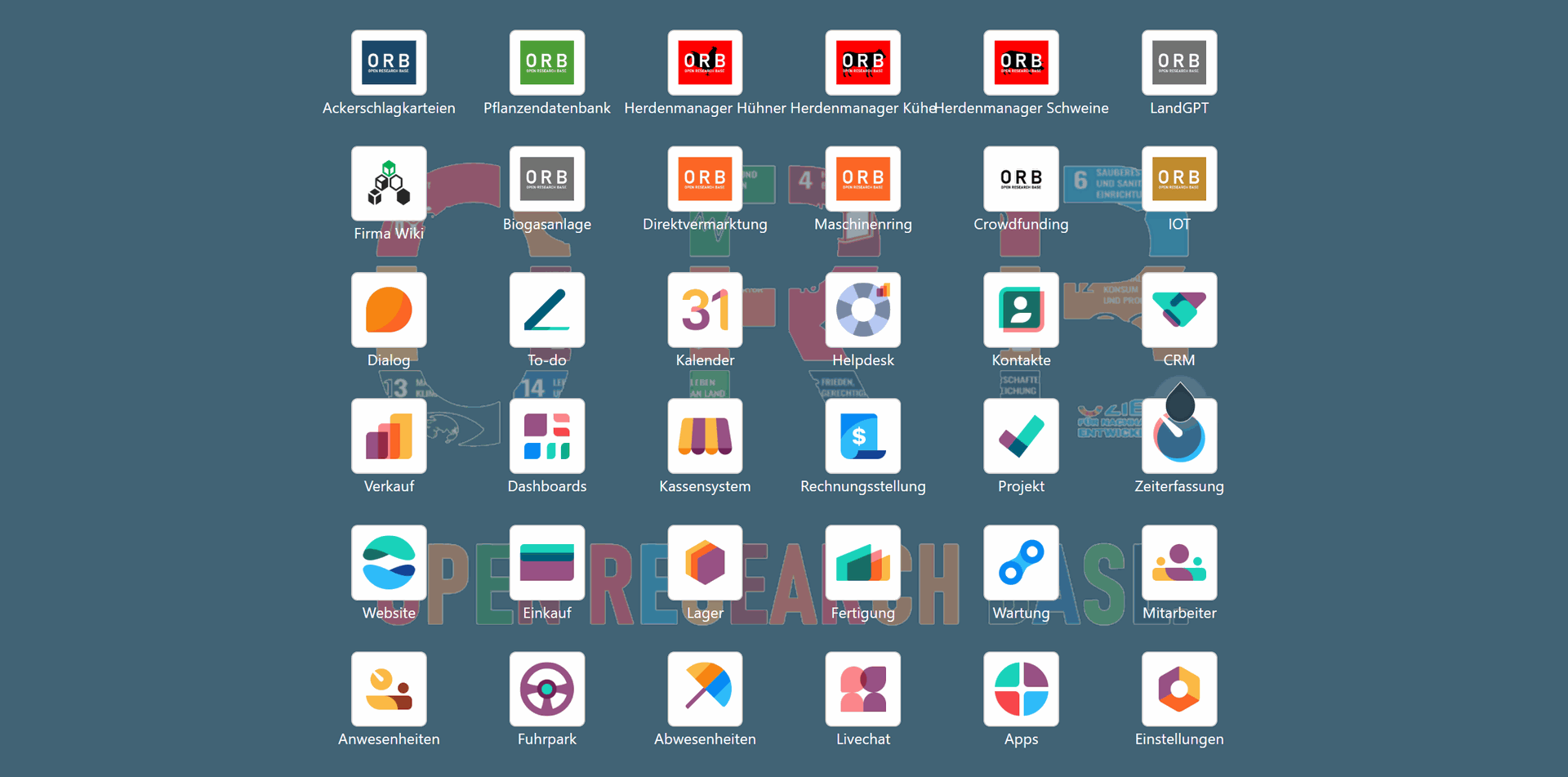
ORB-FMS is an integrated open-source platform that, unlike isolated individual solutions, bundles all relevant agricultural processes in one system. It combines classic business processes (e.g. sales, human resources, warehousing) with agriculture-specific functions such as digital field records, plant databases, and barn and herd management. Thanks to this specialization and flexible expandability, ORB-FMS can be individually adapted to the needs of farms, thus going far beyond classic ERP systems.
Thanks to the open-core approach, ORB-FMS avoids expensive licence models and subscription traps. Farmers have full control over their software and can flexibly organise and expand its use without being tied to rigid price structures or individual providers and platforms. This means that ORB-FMS remains attractive and affordable even for small and medium-sized farms.
The modular architecture and open-core approach of ORB-FMS make it easy to integrate new functions and adapt existing modules to the individual needs of farmers. This ensures a high degree of flexibility and future-proofing for the system, guaranteeing long-term use without costly updates or upgrades.
ORB-FMS is consistently tailored to the requirements of agricultural businesses. Unlike conventional ERP systems, it includes agriculture-specific functions such as digital field records, plant databases, and modules for stable and herd management. This allows operational processes to be precisely controlled and continuously optimized—far beyond the scope of classic ERP solutions.
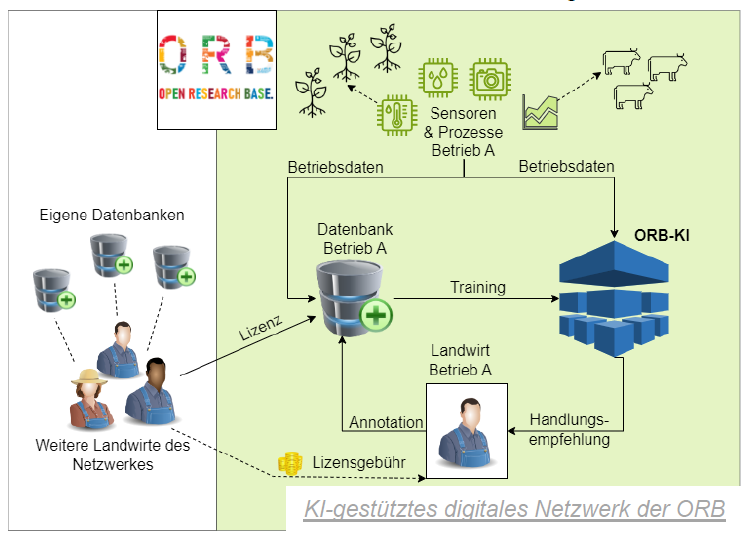
ORB-FMS enables the creation of comprehensive agricultural data sets through automated data collection, which serve as the basis for the use of AI. Farmers can create their own data sets and annotate them manually or automatically to make them usable for training AI models. The trained AI can provide optimized recommendations for action based on real-time operational data.
A key advantage is that the data sets remain entirely in the possession of the farmers, allowing them to remain independent of third-party providers in the AI sector. Within the ORB, these databases can be shared or traded, which promotes the collective exchange of knowledge.
ORB-FMS is not only being developed for farmers, but above all together with them as key players. As members of ORB, farmers have the opportunity to actively participate in the further development of the system. They can define requirements, provide development input, and test partial results on their farms under real conditions at an early stage. This practical development approach ensures that ORB-FMS offers genuine, beneficial solutions that meet the daily requirements of agriculture.
By connecting to the Robot Operating System (ROS), ORB-FMS enables the seamless integration of hardware components such as sensors and actuators. This interface lays the foundation for the automation of agricultural processes by collecting and processing real-time data from devices and machines and integrating it directly into the operational control system. This makes ORB-FMS the central platform that supports both the digital management and physical automation of agriculture.
Agriculture-specific functions of the ORB-FMS
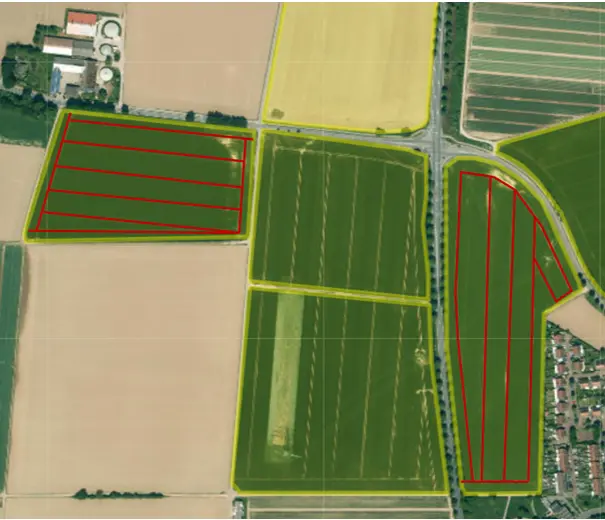
Digital field database and GPS-based field navigation
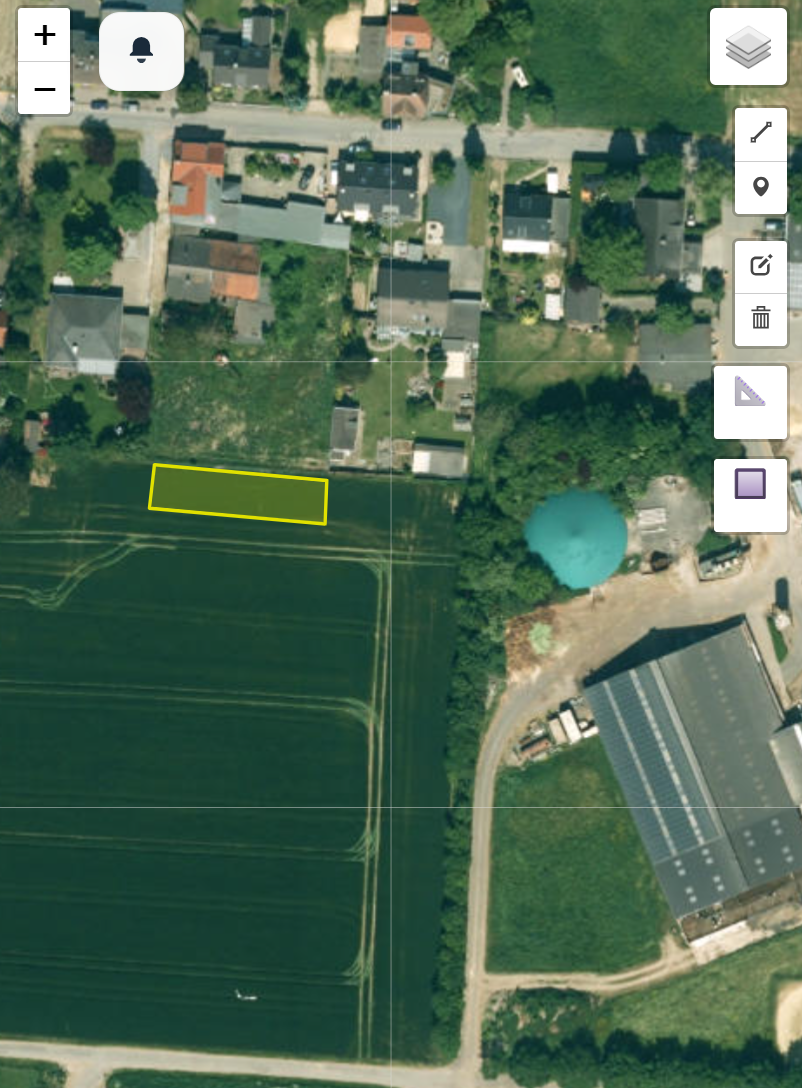
ORB-FMS enables digital field management (including soil conditions, cultivation history, plant protection measures, crop yields) and integrates sensor technology for GPS-supported field navigation, weather data collection, and automatic yield and crop monitoring.
AI analyzes yields, fertilization, soil, and historical data and provides optimized recommendations for action. In addition, crop production processes are simulated to generate precise process time forecasts.
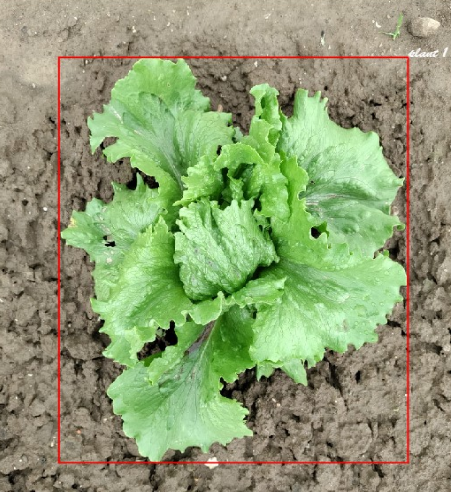
Plant database with annotation tool
ORB-FMS offers a comprehensive plant database that stores both image data and important metadata (including plant, type, BBCH, date, field, position). This data can be entered manually or collected automatically by sensors. The metadata is easy to maintain and edit directly in the system.
Image data can be annotated manually using an integrated annotation tool—with the expertise of farmers—or optionally annotated automatically to prepare ML training. Annotated data sets remain the property of the farmers and can be shared or traded within ORB-FMS, making farms less dependent on third-party AI providers.
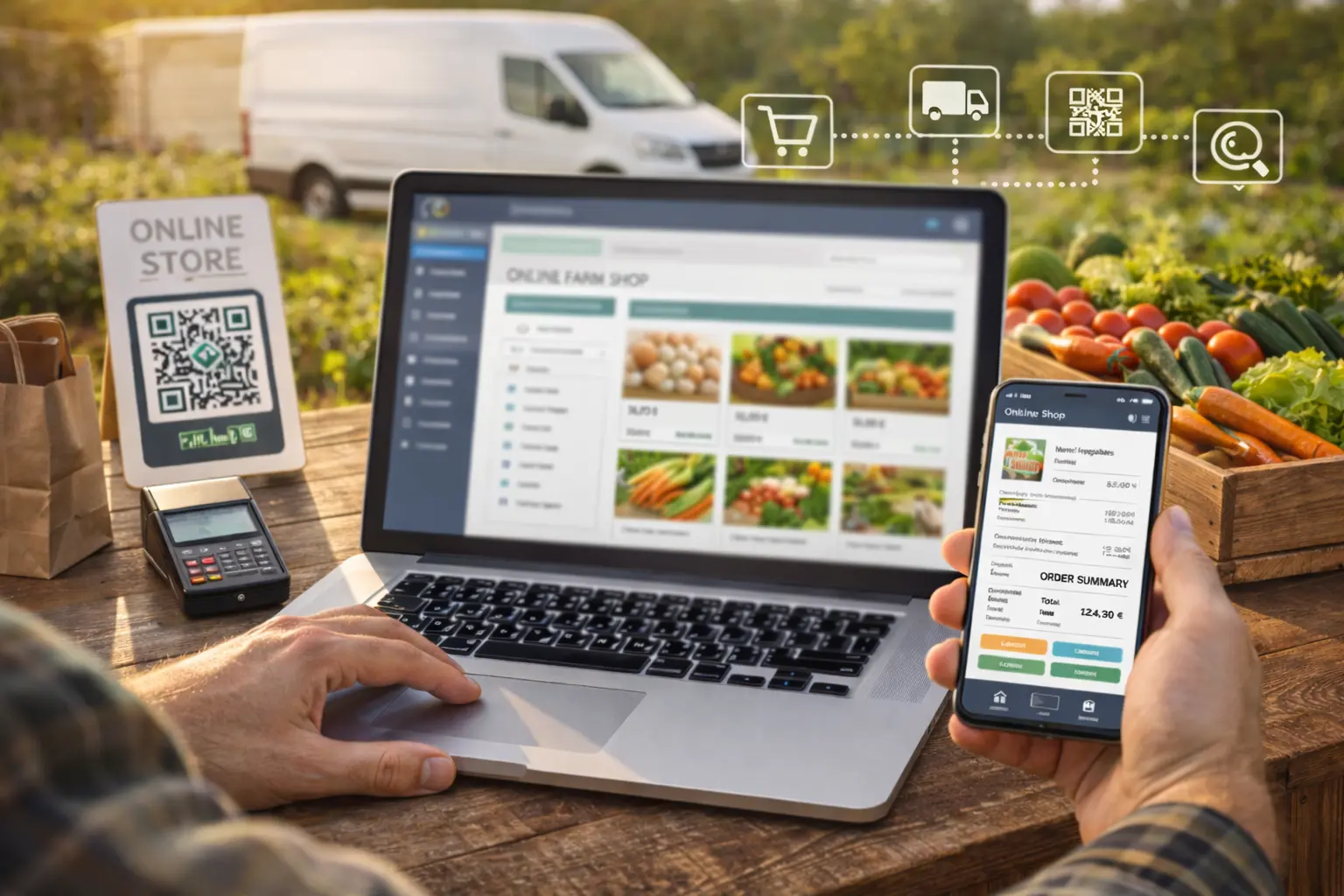
"Field-to-Fork" direct marketing
The "field-to-fork" direct marketing in ORB-FMS digitally maps the entire process chain—from production to inventory, sales, and web shop to route planning for delivery—enabling regional marketing without intermediaries.
In the future, fully automated robots such as DAVEGI (currently under development with Landhouz GmbH) will be integrated into the chain, enabling the automation of crop production processes and allowing the entire value chain—from the field to delivery—to be centrally monitored and controlled within the ORB FMS. This promotes sustainability and regionality through shorter transport routes and reduced packaging, while providing both businesses and consumers with economic resilience as well as healthy, regional products.
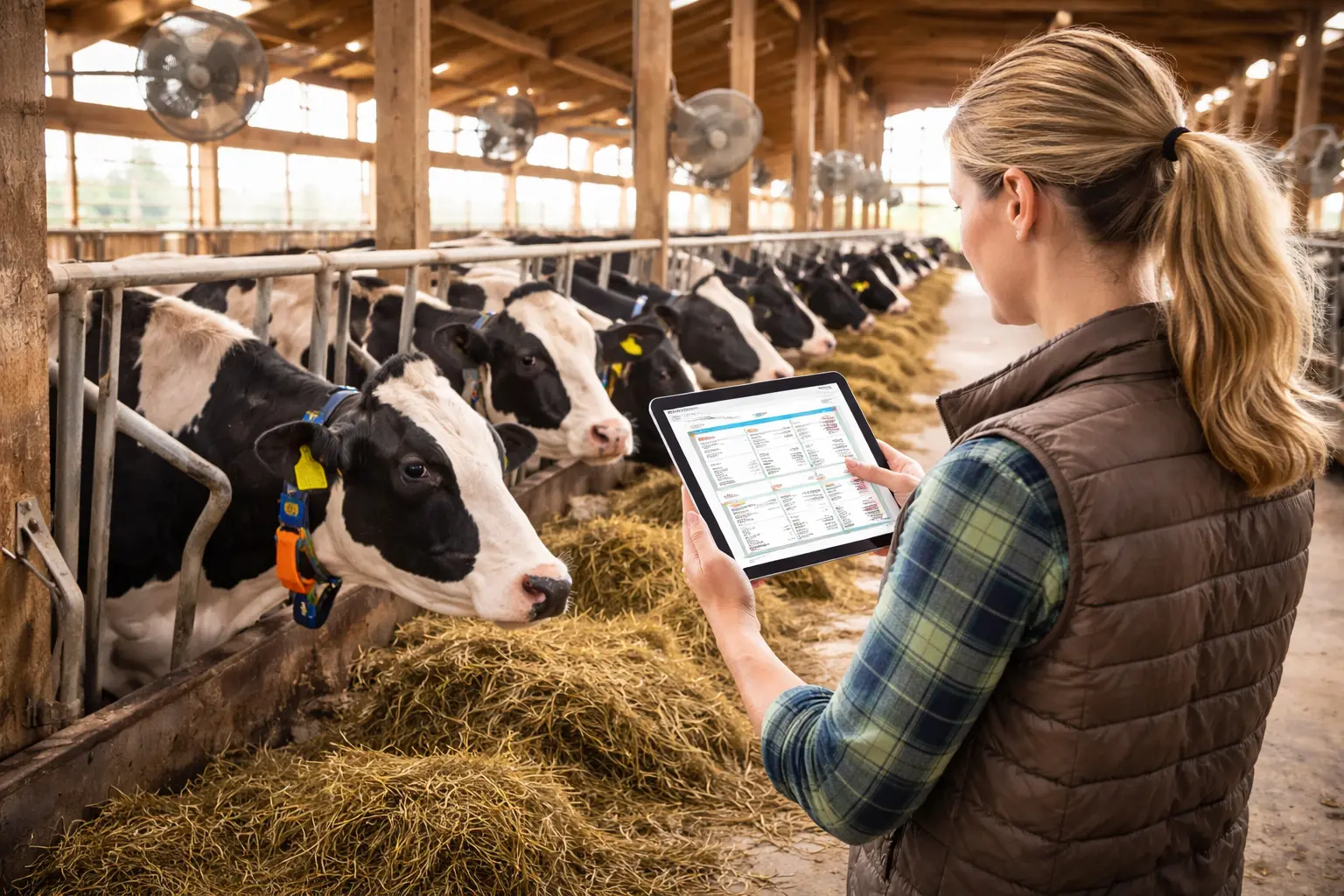
Stable and herd management
The ORB-FMS barn and herd management module will enable the central collection and evaluation of relevant animal husbandry data such as feeding, health, reproduction, barn conditions, and medication use. This will enable farms to make informed decisions, improve productivity and animal welfare, and reliably comply with legal requirements.
In the future, sensor technology and AI will be integrated to automatically collect stable and behavioral data and provide specific recommendations for action via an early warning system.
Liberal AI for agriculture
ORB-FMS enables the creation of comprehensive agricultural data sets as a basis for AI applications through automated data collection. Farmers can create their own databases for crop and herd management and annotate them manually or automatically. In the future, AI will be able to continuously analyze real-time operational data and provide optimized recommendations for action.
The key advantage: the data and annotations remain the sole property of the agricultural companies, which means they are not dependent on third-party AI providers. Optionally, data sets within ORB-FMS can be voluntarily shared or traded to promote knowledge exchange and innovation.
Why is the ORB farm management system worthwhile?
Advantages and special features at a glance